
Table of Contents
Niagen IV Therapy: The Powerful Precursor to NAD+
Niagen IV vs Traditional NAD+ IV Therapy: What's the Difference (and Which Is Right for You)?
If you've been researching NAD+ IV therapy, you've probably run into a second name: Niagen IV. The two get talked about as if they're interchangeable. They're not.
Both raise your body's NAD+ levels. Both deliver real, measurable benefits — better energy, sharper focus, faster recovery, support for healthy aging. But the way they get there is different, the experience during the session is different, and the science behind each one is at a different stage of maturity.
This guide breaks down the difference in clinical terms, explains who should choose which, and tells you why Medical House Calls offers both, having administered thousands of NAD+ and Niagen sessions across the greater Nashville, Tennessee and Birmingham, Alabama areas.
The short version
Traditional NAD+ IV delivers the NAD+ molecule itself, directly into your bloodstream. It works. It's been around longer. And in most clinical settings, the infusion takes 2 to 4 hours and can produce some discomfort during administration — chest pressure, warmth in the face, occasional nausea — that resolves when the drip is slowed.
Niagen IV delivers nicotinamide riboside chloride (NRCl), a precursor your body converts into NAD+ once it's in your bloodstream. It infuses up to 75% faster than traditional NAD+ IV. It's typically more comfortable during administration. And it's built on more than 25 years of pharmaceutical research, with more than 50 patents and 503B Category 1 acceptance behind it.
Both raise NAD+ levels. Both produce the benefits you're looking for. The difference is in how, how fast, and how comfortably they get you there.
What is traditional NAD+ IV therapy?
Traditional NAD+ IV is exactly what it sounds like: a clinical dose of NAD+ delivered intravenously, bypassing the digestive system that would otherwise break the molecule down before it could reach your cells.
It's the original IV form of NAD+ replacement and has been used in functional medicine and wellness clinics for more than a decade. Doses typically run from 250mg to 1,000mg per session, depending on your goals, your tolerance, and your clinician's recommendation.
The benefits it delivers are well-documented:
- Improved mental clarity and focus
- Steadier daytime energy
- Better sleep regulation
- Faster recovery from physical and mental stress
- Support for cellular repair and healthy aging
The catch is the experience during the infusion. Because traditional NAD+ enters your system as the final molecule rather than a precursor, pushing it in too quickly can produce that chest-pressure, flushing, or nauseous sensation patients sometimes describe. Slowing the drip rate fixes it — but slower drips mean longer sessions. A traditional NAD+ IV at a meaningful clinical dose often takes 2 to 4 hours in the chair.
What is Niagen IV?
Niagen IV is a newer, pharmaceutical-grade formulation built on nicotinamide riboside chloride (NRCl). NR is a precursor to NAD+ — meaning your body converts it into NAD+ once it's in your bloodstream.
That conversion step is the key to why Niagen feels different.
Niagen was developed and is supplied by Niagen Plus, a company that has spent more than 25 years researching the science of NAD+ precursors. The formulation holds 503B Category 1 acceptance — meaning it meets pharmaceutical compounding standards held by the U.S. Food and Drug Administration's office of compounding quality and compliance — and is backed by more than 50 patents and a body of peer-reviewed clinical research.
In practice, three things stand out about Niagen IV:
1. It infuses up to 75% faster than traditional NAD+ IV.
A traditional NAD+ IV that would have taken 2 to 4 hours can often be completed in well under an hour with Niagen. For patients with busy lives — and patients who'd rather not spend half a day in a clinic chair — this is the single biggest practical difference.
2. It tends to be more comfortable.
Because Niagen delivers a precursor rather than the finished molecule, the body has a moment to convert it before NAD+ levels spike inside cells. Patients usually report fewer of the chest-pressure, warmth, and nausea sensations that can come with fast traditional NAD+ pushes.
3. Measurable NAD+ increase, fast.
Published research on NR — the active ingredient in Niagen — has shown measurable increases in blood NAD+ levels in healthy adults. Niagen Plus reports that NAD+ levels rise by up to 20% within 3 hours of a Niagen IV session [STUDY CITATION NEEDED — link to Niagen Plus published research].
Side-by-side: the differences that matter
| Factor | Traditional NAD+ IV | Niagen IV |
|---|---|---|
| Active ingredient | NAD+ molecule directly | Nicotinamide riboside chloride (NRCl), an NAD+ precursor |
| Infusion time | Up to 2 hours | Under 60 minutes typical |
| Comfort during infusion | Can produce chest pressure, flushing, nausea — usually resolved by slowing the drip | Fewer of these sensations reported |
| NAD+ increase | Direct — full dose enters the bloodstream | Via conversion — Niagen Plus reports up to 20% within 3 hours |
| Research base | Well-documented over a decade in clinical settings | 25+ years of NR research, 50+ patents, 503B Category 1 acceptance |
| Cost | Generally lower per session | Premium pricing reflects the proprietary formulation |
| Typical doses | 250mg to 1,000mg | Customized to patient goals |
| Best fit | Patients who want the original, well-established option | Patients who prioritize time, comfort, or the latest research |
Which one should you choose?
Here's how we think about it at Medical House Calls.
Niagen IV is usually the right call if:
- Time matters. You've got an hour in your schedule, not three. Niagen lets you get the session done in your living room before your next meeting.
- You're sensitive to the drip sensation. First-time IV patients, anyone who's had a rough experience with traditional NAD+ in the past, or anyone who prefers a smoother session experience tends to do better with Niagen.
- You want the most recent research base. The NR research catalog has grown significantly over the past decade, and the 503B Category 1 status reflects a higher pharmaceutical compounding standard.
- You're investing in long-term healthy aging. The longevity-medicine community has shifted strongly toward NR-based approaches over the past several years.
Traditional NAD+ IV is a strong option if:
- You've used it before with good results. If traditional NAD+ has worked for you and you're comfortable with the longer session time, there's no reason to switch.
- You're cost-sensitive. Traditional NAD+ IV is typically priced lower than Niagen on a per-session basis. For patients planning a long loading phase, the difference can add up.
- You want a high single-dose push. Some clinicians recommend high-dose traditional NAD+ for specific recovery-oriented protocols. Your provider can advise.
The honest answer is that most patients do well with either option — and many start with Niagen because of the comfort and time savings, then ask about traditional NAD+ later for specific use cases.
Why NAD+ levels drop in the first place (and why that matters for choosing a formulation)
Before deciding between Niagen IV and traditional NAD+ IV, it's worth understanding what you're actually correcting.
Your body produces NAD+ naturally from precursors found in food — primarily from compounds in dairy, fish, meat, and certain vegetables. In your 20s and early 30s, this internal production keeps NAD+ levels high. From your mid-30s onward, NAD+ levels begin a steady decline. By age 50, most adults are operating with roughly half the NAD+ levels they had at 25.
Several factors accelerate the drop:
- Chronic stress — including the everyday professional and parental kind
- Poor or irregular sleep — even a few weeks of disrupted sleep meaningfully reduces NAD+
- High-intensity exercise without adequate recovery
- Heavy alcohol consumption
- Acute or chronic illness
- Certain medications and environmental exposures
This matters for choosing between Niagen IV and traditional NAD+ IV because the formulation you choose should match the goal you're trying to hit. If you're correcting a recent depletion — say, you just came off a hard work cycle, a bout of illness, or a stretch of bad sleep — either formulation will help and you'd reasonably choose based on session length and comfort. If you're building a long-term healthy-aging protocol on the foundation of an NAD+ decline that's been compounding for a decade, the conversation with your clinician should be about cadence (how often), dose, and consistency — not just which formulation goes in the bag.
Why MHC offers both (and brings them to you)
Most IV clinics make you choose what they offer. Most of them only offer one or the other. That's a constraint of running a brick-and-mortar location with limited inventory.
Medical House Calls operates differently. Because we come to you, we can match the formulation to your goals rather than the other way around. During your consultation, we'll walk through your priorities — time, comfort, cost, goals — and recommend the option that fits.
A few things that come standard with every NAD+ session at MHC, regardless of which formulation you choose:
- One flat fee that includes the infusion, the licensed clinician's time, all supplies, and travel to your home
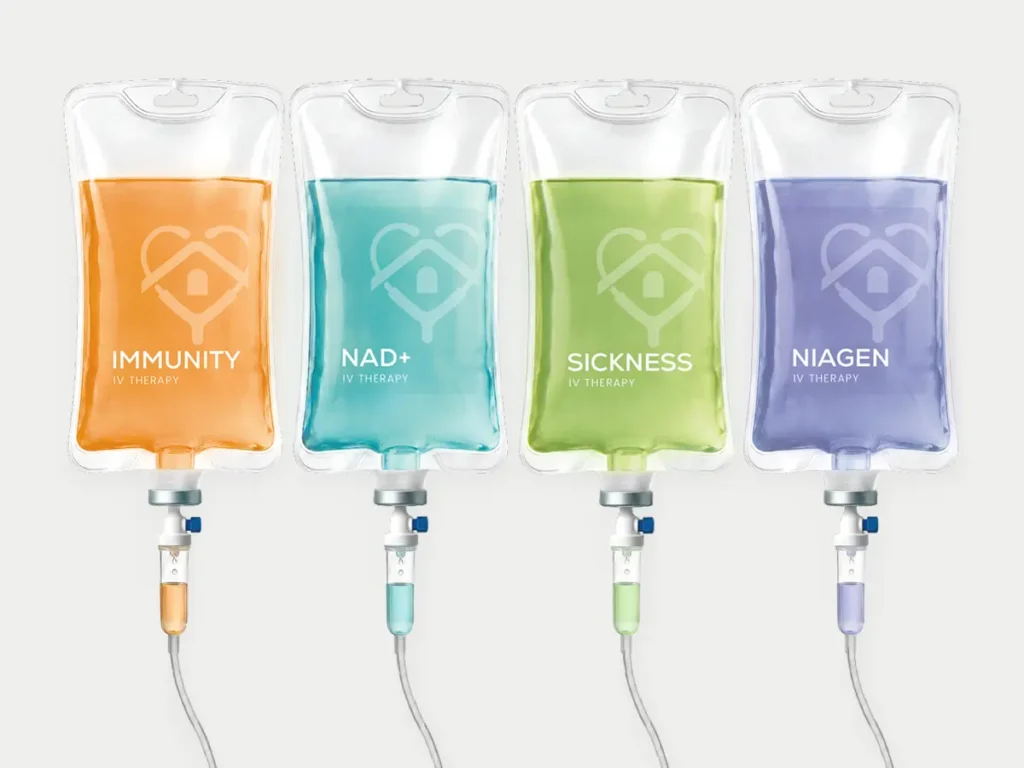
- Complimentary Immunity IV (vitamin C, B-complex, zinc) administered with your NAD+ session
- Customizable dose — 250mg, 500mg, 750mg, or 1,000mg for traditional NAD+; customized doses for Niagen
- In-home administration anywhere in our Middle Tennessee service area — Nashville, Franklin, Brentwood, Murfreesboro, Belle Meade, Spring Hill, and more — and Birmingham, Alabama
- Drip rate controlled to your comfort — if anything feels off, your clinician slows it down on the spot
We don't have a waiting room. The nearest clinic is your home.
What a session looks like in practice
Whether you choose Niagen IV or traditional NAD+, the visit follows the same pattern:
- Booking. Text or call our team to schedule. We'll send a short pre-session form to confirm you're a good candidate.
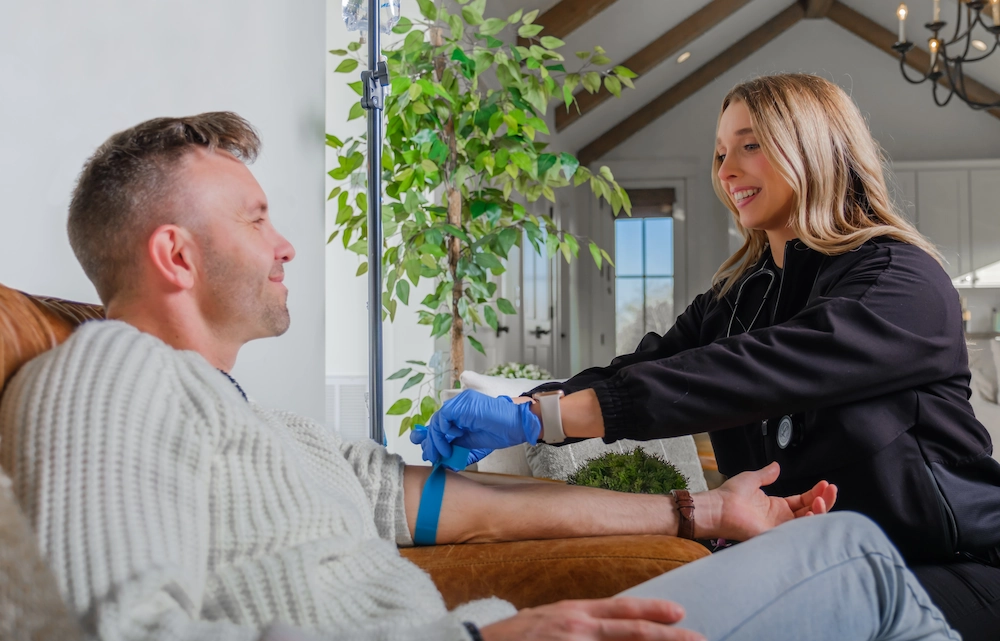
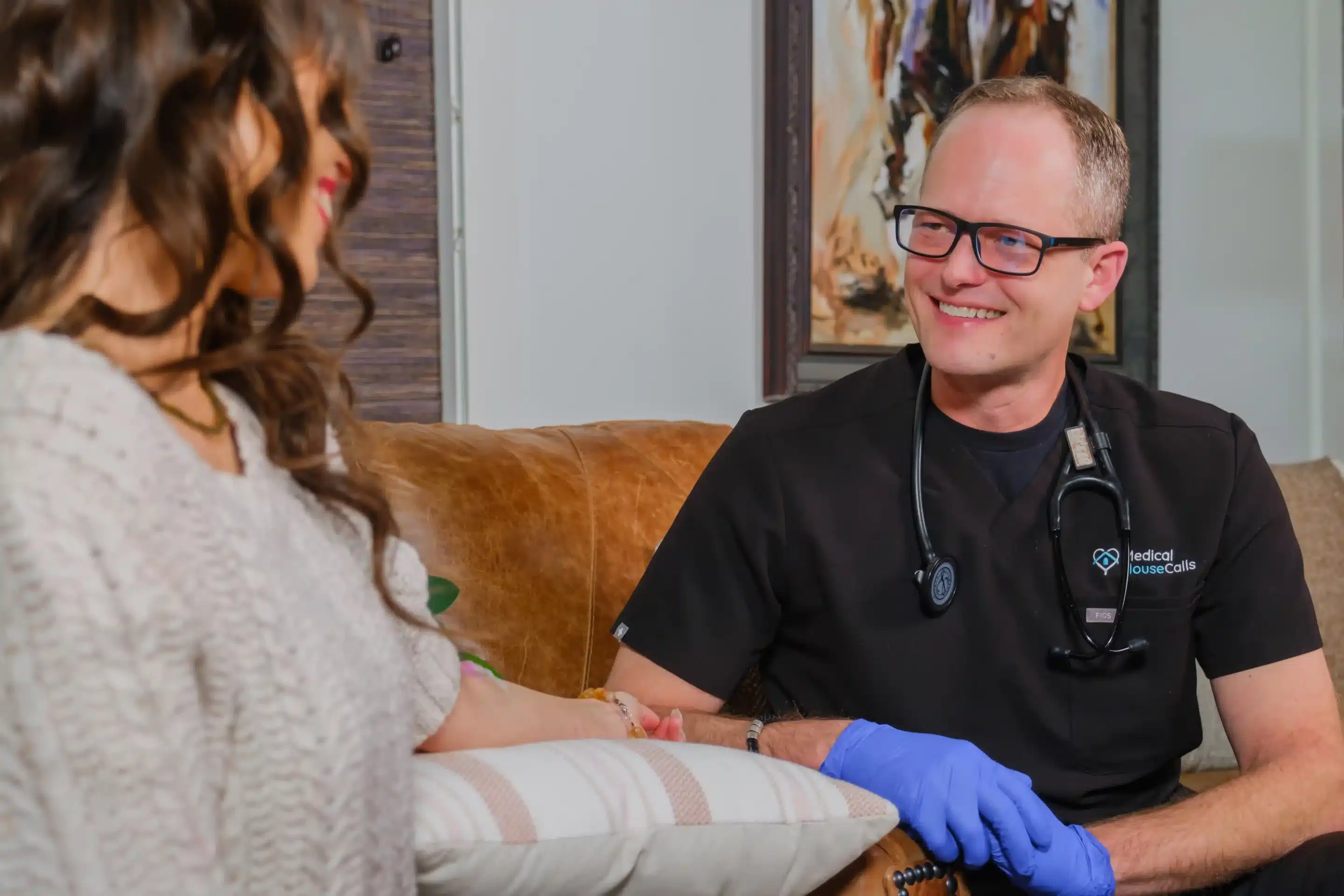
- Arrival. A licensed clinician arrives at your home at the time you booked, anywhere in our service area.
- Setup. They take a few minutes to set up the IV, talk through what you'll feel, and answer any last questions.
- The drip. Under an hour for Niagen, longer for traditional NAD+. Most patients spend the time reading, working, or watching a show. Some take the chance to rest.
- Wrap-up. When the infusion is done, your clinician packs up and is on their way. Most patients feel something within 24 to 72 hours.
What it costs
Pricing depends on the formulation and the dose. NAD+ IV sessions at Medical House Calls start at $499 and run up to $799 for higher-dose Niagen sessions. Every session includes the complimentary Immunity IV and the in-home delivery.
For a full pricing breakdown, including how MHC's flat-fee model compares to clinic-based competitors and how to use HSA/FSA funds, see How Much Does NAD+ IV Therapy Cost? Real Pricing in Tennessee.
Ready to find out which is right for you?
The best place to start is a free 15-minute consultation with one of our licensed clinicians. We'll talk through your goals, walk you through the differences between Niagen and traditional NAD+ in the context of what you're trying to achieve, and help you decide whether to book a session and which formulation to start with.
No pressure, no clinic chair, no commute.
For more on the specific benefits each formulation supports, see 9 Real Benefits of NAD+ IV Therapy.
FAQ
Is Niagen IV the same as NAD+ IV?
No. Traditional NAD+ IV delivers the NAD+ molecule directly. Niagen IV delivers nicotinamide riboside chloride (NRCl), a precursor that your body converts into NAD+. Both raise NAD+ levels, but Niagen infuses up to 75% faster and tends to be more comfortable during administration.
Is Niagen IV better than NAD+ IV?
For most patients, Niagen IV offers a better session experience — faster infusion time, fewer uncomfortable sensations, and a strong research base. Traditional NAD+ IV remains an effective option, especially for patients who've used it successfully in the past or who are cost-sensitive.
How long does a Niagen IV take?
Most Niagen IV sessions are completed in under 60 minutes, compared to 2 to 4 hours for a comparable traditional NAD+ IV.
Is Niagen IV FDA approved?
Niagen IV is compounded to 503B Category 1 standards, which is the highest tier of compounded pharmaceutical preparation regulated by the FDA's office of compounding quality and compliance. The NR active ingredient is supported by more than 50 patents and a published research base.
How much does Niagen IV cost?
At Medical House Calls, NAD+ and Niagen IV sessions start at $499 and run up to $799 for higher-dose sessions. Every session is in-home and includes a complimentary Immunity IV. For a full pricing breakdown, see our cost guide.
Unlock Vitality with NAD+ Therapy
Experience the anti-aging and revitalizing benefits of NAD+ IV therapy at home. Improve focus, energy, and cellular health with this advanced treatment.